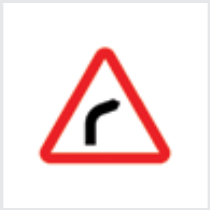
The handbook shows this entry without any further guidance.
Source: Handbook Appendix: Road traffic signs, p. 185
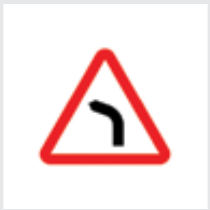
22. Left hand bend
Be prepared for oncoming traffic. Adapt your speed to local visibility, the sharpness of the bend and whether the road is banked. Do not stop at places where visibility is restricted.
Source: Handbook Appendix: Road traffic signs, p. 185
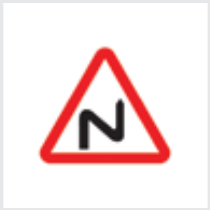
33. Double bend, first to the Right
The handbook shows this entry without any further guidance.
Source: Handbook Appendix: Road traffic signs, p. 185
44. Double bend, first to the Left
If there are more than two dangerous bends ahead, the length of the danger zone is indicated on a supplementary sign in meters.
Source: Handbook Appendix: Road traffic signs, p. 185
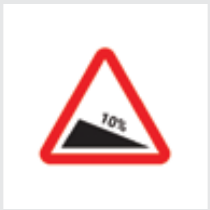
55. Steep downhill
Your braking distance may be longer and your speed faster than you think. The gradient will be indicated as a percentage.
Source: Handbook Appendix: Road traffic signs, p. 185
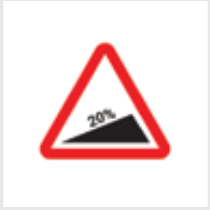
66. Steep hill uphill
Your overtaking distance may be longer and your engine power will be weaker. The gradient will be indicated as a percentage.
Source: Handbook Appendix: Road traffic signs, p. 185
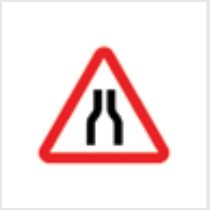
77. Road narrows on both sides
The handbook shows this entry without any further guidance.
Source: Handbook Appendix: Road traffic signs, p. 186
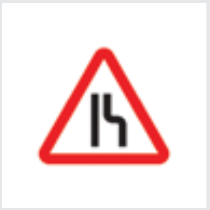
88. Road narrows from right
The handbook shows this entry without any further guidance.
Source: Handbook Appendix: Road traffic signs, p. 186
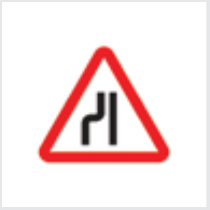
99. Road narrows from left
The handbook shows this entry without any further guidance.
Source: Handbook Appendix: Road traffic signs, p. 186
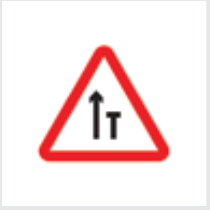
1010. Right carriageway closed
The handbook shows this entry without any further guidance.
Source: Handbook Appendix: Road traffic signs, p. 186
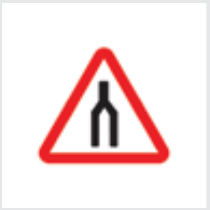
1111. Dual carriageway ends
The handbook shows this entry without any further guidance.
Source: Handbook Appendix: Road traffic signs, p. 186
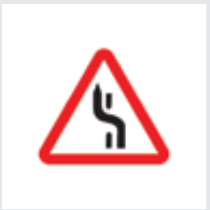
1212. Diversion
Be prepared for oncoming traffic. Finish overtaking well before the sign. Adapt your speed and position to that of vehicles traveling in the same direction as yours.
Source: Handbook Appendix: Road traffic signs, p. 186
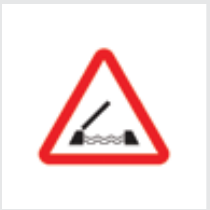
1313. Opening or swing bridge ahead
There may be a traffic light. Be prepared to stop.
Source: Handbook Appendix: Road traffic signs, p. 186
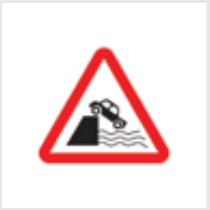
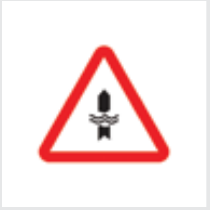
1414. Quayside or riverbank
End of your road ahead.
Source: Handbook Appendix: Road traffic signs, p. 187
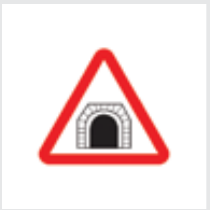
1515. Tunnel ahead
No stopping and turn on your headlights.
Source: Handbook Appendix: Road traffic signs, p. 187
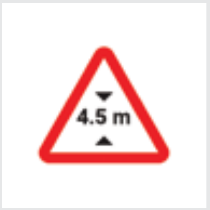
1616. Maximum height
The handbook shows this entry without any further guidance.
Source: Handbook Appendix: Road traffic signs, p. 187
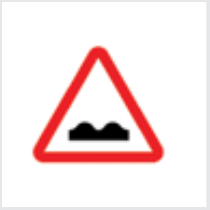
1717. Uneven road
Poor road-grip could cause skids. Expect braking distance to be longer than normal. Slow down.
Source: Handbook Appendix: Road traffic signs, p. 187
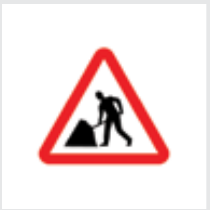
1818. Road works ahead/ Men at work
Drive carefully. The road could be narrow and in poor surface condition. Watch out for gravel or loose stones and workers on the road.
Source: Handbook Appendix: Road traffic signs, p. 187
1919. Bridge ahead
The handbook shows this entry without any further guidance.
Source: Handbook Appendix: Road traffic signs, p. 187
2020. Ford ahead
In the rainy season, this road is likely to be flooded.
Source: Handbook Appendix: Road traffic signs, p. 187
2121. Dip ahead
Finish overtaking well before the sign. Do not overtake too close to the dip. Slow down.
Source: Handbook Appendix: Road traffic signs, p. 188
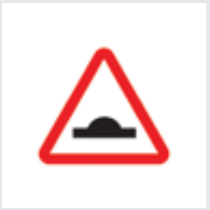
2222. Hump ahead
Slow down so that you do not lose control and damage the vehicle.
Source: Handbook Appendix: Road traffic signs, p. 188
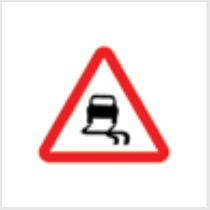
2323. Slippery roads
Carriageway may be slippery, even in good weather.
Source: Handbook Appendix: Road traffic signs, p. 188
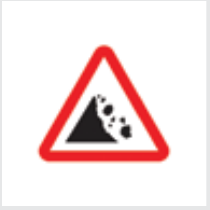
2424. Falling rocks (or fallen rocks)
Be ready to encounter boulders on the road.
Source: Handbook Appendix: Road traffic signs, p. 188
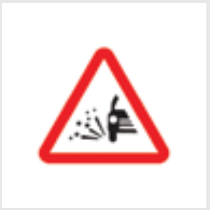
2525. Loose gravel or chippings
Slow down for oncoming traffic. Keep your distance from vehicles ahead. Do not overtake.
Source: Handbook Appendix: Road traffic signs, p. 188
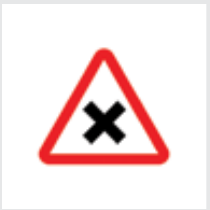
2626. Junction ahead
The handbook shows this entry without any further guidance.
Source: Handbook Appendix: Road traffic signs, p. 188
2727. T-Junction ahead
How well can you see the junction? Give way to vehicles approaching from the left.
Source: Handbook Appendix: Road traffic signs, p. 188
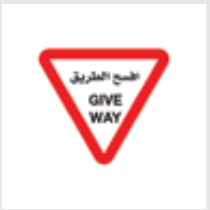
2828. Give way
Signal your intentions clearly and give way when required. The sign will be erected as close to the junction as possible.
Source: Handbook Appendix: Road traffic signs, p. 189
2929. T-Junction ahead, main road turning left
The handbook shows this entry without any further guidance.
Source: Handbook Appendix: Road traffic signs, p. 189
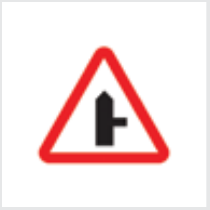
3030. Minor road on right
The handbook shows this entry without any further guidance.
Source: Handbook Appendix: Road traffic signs, p. 189
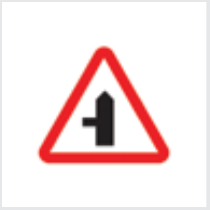
3131. Minor road on left
The handbook shows this entry without any further guidance.
Source: Handbook Appendix: Road traffic signs, p. 189
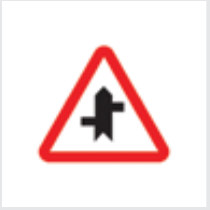
3232. Staggered junction
The handbook shows this entry without any further guidance.
Source: Handbook Appendix: Road traffic signs, p. 189
3333. Junction left
The handbook shows this entry without any further guidance.
Source: Handbook Appendix: Road traffic signs, p. 189
3434. Junction right
The handbook shows this entry without any further guidance.
Source: Handbook Appendix: Road traffic signs, p. 189
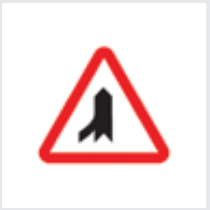
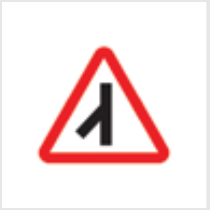
3535. Traffic merging from left
The handbook shows this entry without any further guidance.
Source: Handbook Appendix: Road traffic signs, p. 190
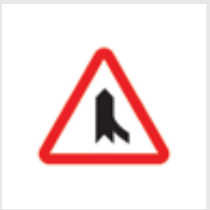
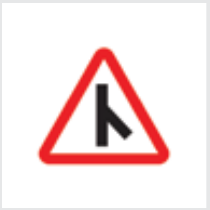
3636. Traffic merging from right
The handbook shows this entry without any further guidance.
Source: Handbook Appendix: Road traffic signs, p. 190
3737. Roundabout
Give way to traffic approaching from the left. Watch out for road signs and note the position of entrances and exits.
Source: Handbook Appendix: Road traffic signs, p. 190
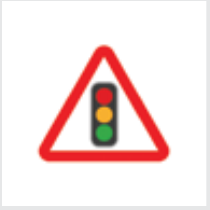
3838. Traffic lights ahead
Be ready to obey the traffic light signals.
Source: Handbook Appendix: Road traffic signs, p. 190
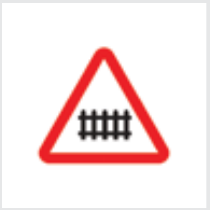
3939. Level crossing with barrier or gate ahead
The handbook shows this entry without any further guidance.
Source: Handbook Appendix: Road traffic signs, p. 190
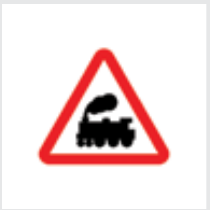
4040. Level crossing without barrier ahead
At level crossings the big danger is trains; so safety first is the rule here. Visibility and the state of the road are extra important. Not in use in the UAE.
Source: Handbook Appendix: Road traffic signs, p. 190
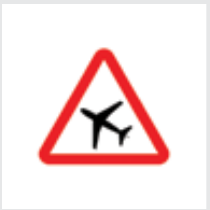
4141. Low flying aircraft
Expect sudden aircraft noise also. There may also be a traffic light.
Source: Handbook Appendix: Road traffic signs, p. 190
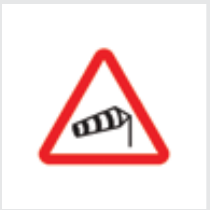
4242. Strong cross winds
The windsock symbol shows the direction of the prevailing wind. Keep alert to the state of the road and be prepared to encounter sudden gusts of wind.
Source: Handbook Appendix: Road traffic signs, p. 191
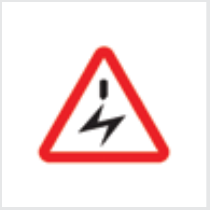
4343. Electric cable
The handbook shows this entry without any further guidance.
Source: Handbook Appendix: Road traffic signs, p. 191
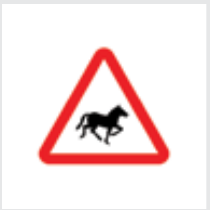
4444. Accompanied horses or ponies crossing the road ahead
The handbook shows this entry without any further guidance.
Source: Handbook Appendix: Road traffic signs, p. 191
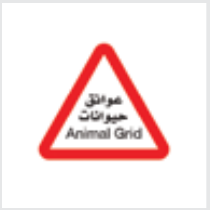
4545. Animal grid
The handbook shows this entry without any further guidance.
Source: Handbook Appendix: Road traffic signs, p. 191
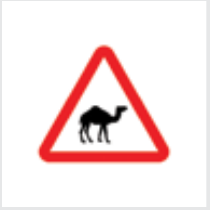
4646. Wild animals (camel)
Several different animal symbols are used. Slow down and watch out for animals at the side of the road. Dawn and dusk are the most dangerous times.
Source: Handbook Appendix: Road traffic signs, p. 191
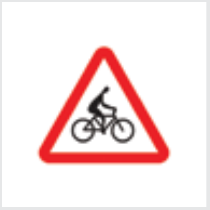
4747. Cyclists on carriageway
The handbook shows this entry without any further guidance.
Source: Handbook Appendix: Road traffic signs, p. 191
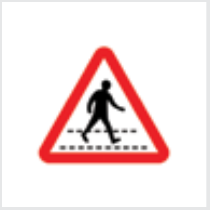
4848. Pedestrian crossing
You are approaching a pedestrian crossing. Be ready to stop.
Source: Handbook Appendix: Road traffic signs, p. 191
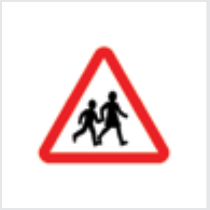
4949. Children
Children are difficult to see and are unaccustomed to traffic. They are unpredictable in their movements and may suddenly change their minds.
Source: Handbook Appendix: Road traffic signs, p. 192
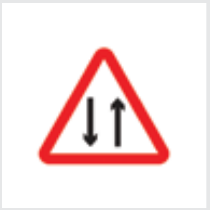
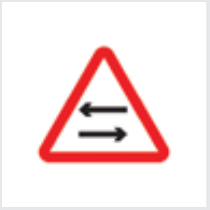
5050. Two-way traffic straight ahead
A one-way lane or carriageway becomes two-way up ahead. Get ready to meet oncoming traffic on the road ahead.
Source: Handbook Appendix: Road traffic signs, p. 192
5151. Two-way traffic crosses one-way road
The handbook shows this entry without any further guidance.
Source: Handbook Appendix: Road traffic signs, p. 192
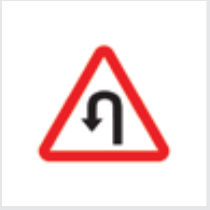
5252. U-turn
Warning for vehicle making U-turns from the left lane.
Source: Handbook Appendix: Road traffic signs, p. 192
5353. Hazard ahead (or other danger)
The exact hazard may be specified on a supplementary sign.
Source: Handbook Appendix: Road traffic signs, p. 192
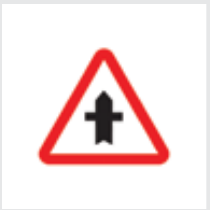
5454. Crossroad ahead
The handbook shows this entry without any further guidance.
Source: Handbook Appendix: Road traffic signs, p. 192
Images and wording are taken from the Emirates Driving Company Light Vehicle Handbook (v1.2), which notes that some signs are not in use in the UAE. Signs on the road today may differ; always follow the signs you actually see and current official guidance.